Ayurvedic Guide to Dark Circles: Causes, Remedies, and Panchakarma Solutions
Dark circles around the eyes are a widespread aesthetic and health concern in modern daily life. While late nights and digital screen strain are often blamed, classical Ayurveda views under-eye discoloration as an external reflection of internal physiological imbalances.
How Does Ayurveda Explain Dark Circles Under the Eyes?
According to classical Ayurveda, dark circles under the eyes are primarily caused by an imbalance in Vata and Pitta doshas, combined with sluggish circulation and toxin accumulation (Ama) in the skin tissue (Rakta and Mamsa Dhatus). The delicate skin surrounding the eyes reflects the health of the nervous system, digestive fire (Agni), and liver function. Traditional Ayurvedic care focuses on rebalancing these underlying doshas and nourishing the tissue layers naturally.
Understanding Dark Circles Through Ayurveda: Dosha Imbalances and Root Causes
In Ayurvedic physiology, the skin around the eyes (Twak) is exceptionally thin and sensitive. It is governed primarily by Bhrajaka Pitta, the sub-dosha responsible for skin tone, complexion, and luster, alongside Tarpaka Kapha, which lubricates the eyes and surrounding delicate structures. When lifestyle factors disrupt these subtle energies, discoloration and puffiness frequently emerge.
Vata Dosha Imbalance and Dryness
Vata dosha represents the elements of air and ether, bringing qualities of dryness, coldness, roughness, and hyperpigmentation when elevated. Factors such as irregular sleeping habits (Ratrijagaran), excessive mental fatigue, skipping meals, and inadequate dehydration lead to an aggravation of Vata. This excess dry quality drains moisture from the under-eye area, leading to sunken eyes, fine lines, and dark brownish-black pigmentation.
Pitta Dosha Imbalance and Pigmentation
Pitta dosha, governed by fire and water elements, regulates metabolic activity and skin coloration. Excessive consumption of spicy, sour, fried, or overly salty foods, prolonged exposure to heat, and unmanaged anger or emotional stress irritate Pitta. When irritated Pitta resides in the blood tissue (Rakta Dhatu), it manifests as reddish-purple discoloration, inflammation, and sensitive under-eye skin.
Disturbed Sleep and Ama (Metabolic Toxins)
Digestion is central to skin radiance in Ayurvedic philosophy. A weak digestive fire (Mandagni) leads to improperly digested food particles, creating a sticky toxic residue called Ama. When Ama circulates through the micro-channels (Srotas) of the body, it blocks nutrient delivery to the face and under-eye skin. Inadequate or poor-quality sleep further exacerbates Ama formation, leaving the skin dull and fatigued.
Digital Eye Strain and Physical Fatigue
Staring at computer screens and smartphones for extended hours stresses the optic nerves and strains the subtle eye tissues. This continuous strain exhausts the cooling Tarpaka Kapha, causing localized heat and Vata buildup around the eye contours.
Key Ayurvedic Approaches to Support Under-Eye Skin Health
Restoring a natural glow around the eyes requires a holistic combination of internal nourishment, skin hydration, and healthy lifestyle routines. Tailoring your approach based on your unique body constitution is essential; you can discover your baseline imbalance through a Prakriti assessment.
1. Dietary Guidelines (Ahar) for Clear Skin
Nutrition plays a pivotal role in balancing internal doshas and improving blood circulation to the facial tissues. Traditional recommendations include:
- Hydrating Foods: Incorporate sweet juicy fruits like pomegranates, fresh grapes, melons, and soaked raisins, which help soothe Pitta and hydrate Vata.
- Healthy Fats: Consume small amounts of pure cow’s ghee daily. Ghee is traditionally valued for lubricating internal channels, nourishing the nervous system, and soothing Vata-Pitta imbalances.
- Cooling Herbs and Drinks: Sip on coconut water, fresh aloe vera juice, or water infused with coriander seeds throughout the day to support internal cooling.
- Foods to Avoid: Reduce consumption of excessively hot, spicy, fermented, deeply fried, or processed items that exacerbate internal inflammation.
2. Daily Habits and Sleep Hygiene (Vihar & Dinacharya)
Correcting your daily routine is one of the most effective ways to support skin regeneration and reduce under-eye darkness.
- Consistent Sleep Schedule: Aim to go to bed before 10:00 PM when Pitta energy dominates the atmosphere, allowing the liver and skin tissues to repair effectively.
- Digital Rest: Follow the 20-20-20 rule during screen work, taking regular breaks to rest the eyes and prevent local Vata accumulation.
- Gentle Eye Washing: Rinse your eyes with cool, clean water or organic rose water morning and evening to refresh tired tissues.
3. Traditional External Applications
Herbal formulations and cold-pressed botanical oils have been traditionally used in Ayurvedic skin care for centuries:
- Kumkumadi Tailam: A renowned classical herbal oil containing saffron, sandalwood, and lotus stamens, traditionally used to support skin brightness and evening out skin tone.
- Aloe Vera Gel (Kumari): Fresh aloe vera gel applied gently around the eyes may offer a cooling sensation, hydrating parched skin and calming Pitta-driven redness.
- Sandalwood (Chandana) Paste: Sandalwood combined with cold milk or rose water makes a soothing paste that helps cool the under-eye region.
Panchakarma and Clinical Ayurvedic Therapies for Eye Care
For persistent dark circles associated with chronic fatigue, sinus congestion, or deep-seated dosha imbalances, traditional Panchakarma therapies offer structured, therapeutic support under professional supervision. Visiting an experienced practitioner in Jaipur allows for customized clinical planning.
Nasya Therapy (Nasal Administration)
Nasya is the administration of medicated herbal oils or drops through the nasal passages. In Ayurveda, the nose is considered the doorway to the head (Nasa Hi Shirso Dwaram). Nasya therapy helps clear toxins from the supraclavicular channels, supports sinus drainage, eases eye fatigue, and promotes blood circulation across the facial region. Explore full options for specialized Ayurvedic therapies to understand how Nasya works.
Shirodhara
Shirodhara involves the continuous, gentle pouring of warm medicated oil, milk, or herbal buttermilk over the forehead. This deeply relaxing therapy calms the central nervous system, reduces Vata dosha, lowers mental stress, and promotes restorative sleep—key factors in minimizing dark under-eye rings.
Netra Tarpana / Akshi Tarpana
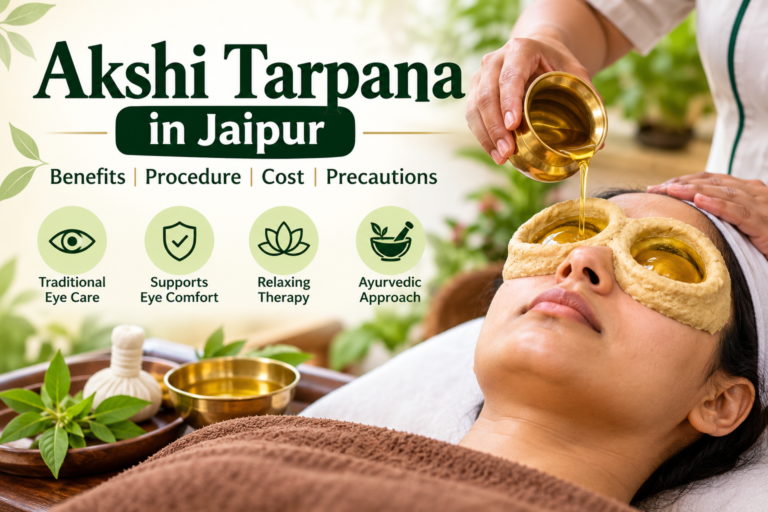
Netra Tarpana is a specialized ocular rejuvenation therapy where a dam made of herbal dough is built around the eyes and filled with lukewarm medicated ghee. This procedure deeply nourishes the optic structures, lubricates dry tissues, diminishes eye strain, and revitalizes the delicate surrounding skin.
Abhyanga and Mukha Abhyanga
Full-body massage (Abhyanga) and specialized facial massage (Mukha Abhyanga) using warm, herbalized oils help stimulate lymphatic drainage, enhance blood flow, and relieve tension held in the facial muscles.
When Should You Consult an Ayurvedic Doctor?
While standard under-eye dark circles are primarily an aesthetic concern linked to tiredness, certain symptoms warrant a comprehensive medical consultation. You should consult a physician promptly if you observe any of the following red-flag signs:
- Sudden, asymmetrical swelling or severe darkness around only one eye.
- Dark circles accompanied by severe pain, burning, or discharge from the eyes.
- Unexplained rapid weight changes, extreme persistent fatigue, or general body swelling (edema).
- Changes in vision, double vision, or difficulty moving the eyeball.
- Discoloration that worsens rapidly despite adequate rest and balanced hydration.
A thorough examination by qualified Ayurvedic specialists helps rule out underlying metabolic, kidney, or thyroid conditions while creating a personalized regimen tailored to your constitution.
Frequently Asked Questions
Can Ayurveda help reduce under-eye dark circles naturally?
Ayurveda offers supportive care by addressing the root causes of under-eye discoloration, such as Vata-Pitta imbalances, poor sleep, and sluggish circulation. Through dietary modifications, lifestyle alignment, internal herbal support, and Panchakarma therapies, Ayurveda helps promote long-term skin vitality. Individual results vary depending on body type and consistency.
How long does it take to notice skin improvements with Ayurvedic care?
Because Ayurvedic care works from within by balancing metabolic processes and tissue nutrition, changes typically develop gradually over several weeks. Consistent sleep habits, proper hydration, and personalized therapies under expert guidance support natural progression over time.
Is Nasya therapy helpful for under-eye hyperpigmentation?
Yes, Nasya therapy is traditionally utilized to clear micro-channels in the facial region. By improving local circulation and easing head and eye tension, Nasya may support a clearer, more vibrant facial tone around the eyes.
What daily habits trigger Vata-Pitta imbalances around the eyes?
Common triggers include late-night sleeping (Ratrijagaran), excessive uninterrupted digital screen usage, skipping meals, inadequate water intake, high stress, and consuming overly spicy or processed foods. Correcting these habits forms the foundation of Ayurvedic skin wellness. For more lifestyle guidelines, explore our practical Ayurvedic health tips.
Consult Ayujivan Ayurveda & Panchkarma in Jaipur
If persistent dark circles, eye strain, or skin fatigue are affecting your confidence and wellbeing, personalized Ayurvedic guidance can help restore your body’s natural balance. At Ayujivan Ayurveda & Panchkarma in Macheda, Jaipur, our experienced doctors—Dr. Krishan Choudhary (BAMS, Founder) and Dr. Vasudev Singh (BAMS, 30+ years of clinical experience)—offer detailed Prakriti evaluations and authentic Panchakarma care. Take the first step toward skin vitality today: Book Consultation online, or call/WhatsApp us directly at 9351504678.
This article is for general education and is not a substitute for a personal medical consultation. See our medical disclaimer.